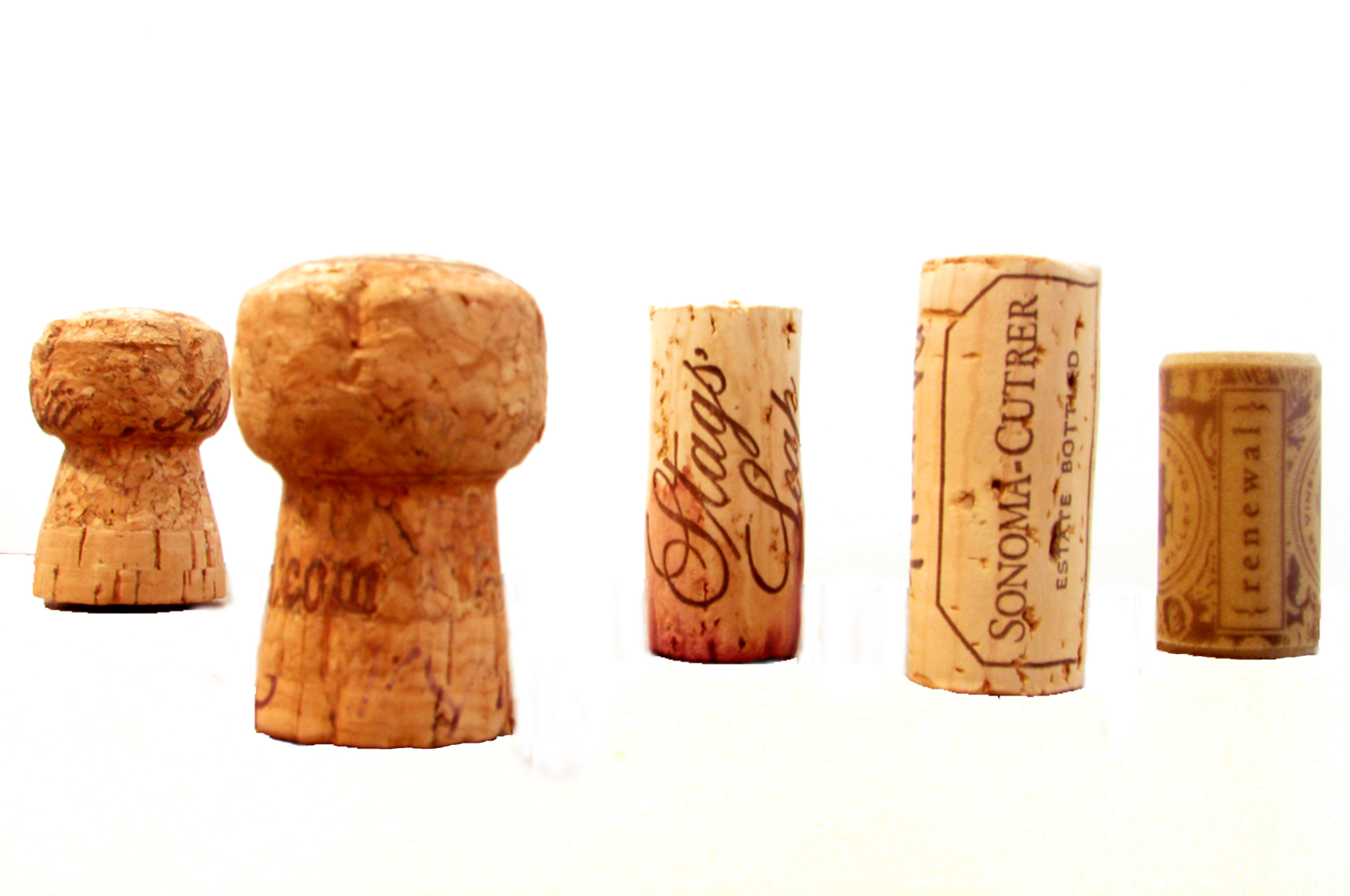
Tapones de corcho natural. Servicio y calidad - Natural cork closures. Service and quality - Taps de suro natural. Servei i qualitat - Bouchons en liège naturel. Service et qualité - Tappi in sughero naturale. Servizio e qualità - Naturkorken. Service und Qualität

Star Cork Spain

Administración: Les Mèlies, 8, 08830 - Sant Boi de Llobregat, Barcelona, Catalunya, España Tel.: +34 93.8084085

Mail: starcorkspain@gmail.com

http://starcorktaponesdecorcho.blogspot.com/


Mostrando entradas con la etiqueta 9.3 Qué opinan las bodegas - Wineries's Opinion. Mostrar todas las entradas

martes, 11 de julio de 2017

Carlos Nieto Pardal,Enólogo Finca Viladellops : Libreta del enólogo: Importancia y función del tapón

Libreta del enólogo: Importancia y función del tapón


Carlos Nieto Pardal.Enólogo Finca Viladellops
Finca Viladellops


Función del tapón

El tapón tiene el objetivo de conservar el vino en buen estado durante el almacenamiento del mismo, evita que penetre una cantidad de oxígeno inadecuada, la contaminación de agentes desagradables como mohos y bacterias y también evita la penetración de otras sustancias externas.
Tipos de Tapones
Corcho:

Tapón obtenido de la corteza del alcornoque. El árbol tarda 30-50 años en producir una corteza útil para la fabricación de tapones. Una vez extraída la corteza, se “pela”, tarda entre 8-10 años en genera una nueva corteza aprovechable. La corteza está formada por células muertas. El corcho es poroso a la vez que es impermeable a líquidos y la mayoría de los gases. Tiene gran resistencia a la humedad.

El principal enemigo del corcho es el TCA (2,4,6, tricloroanisol). Generado por ciertos hongos aporta al vino el negativo “gusto a corcho” (problema aromático y gustativo). En realidad si la corchera trabaja bien y nosotros tomamos las medidas adecuadas en la elaboración y conservación de los vinos el problema es prácticamente inexistente.

Otro problema del corcho es la generación de polvo e incluso pequeñas virutas, tanto al taponar como al extraerlo de la botella

Aunque es un producto heterogéneo, en la selección de los tapones por parte de los fabricantes, se busca la mayor uniformidad.

Clasificamos los tapones de corcho:

Natural: Fabricados en una pieza, uniformes, sin orificios. Ideales para conservación de vinos largo tiempo. Presentan el aspecto visual más perfecto, variable según calidades y en ellos está el tapón ideal para  todos los vinos, otra cosa es que el precio sea acorde a nuestra calidad de vino o nuestra capacidad económica.

Natural colmatado: Es un tapón natural con un número de poros o lenticelas tal, que obliga a cubrir o tapar estas grietas con polvo de corcho virgen. Se utilizan como cola algunos tipos de resina y caucho natural. Tiene un cierre muy similar al natural, un precio económico, pero una estética menos valorada. También se diferencian varias calidades. Menos calidad implica mayor superficie colmatada.

Técnicos: Se incluyen principalmente los aglomerados que contienen trozos de corcho, en diferentes tamaños según su clasificación, que están unidos por cola poliuretano generalmente. A su vez pueden llevar arandelas o discos de corcho natural en los extremos principalmente en la parte que estará en contacto con el vino. Así podemos tener: 1+1 (1 disco de corcho natural en cada uno de los extremos), 2+2 (2 discos en cada extremo), 2+0 (2 discos en sólo un extremo).

El corcho aglomerado asegura un cierre perfecto los primeros 12 meses, aumenta a 2 o 3 años en el tapón 1+1.
 Sintéticos:

Se emplean polímeros sintéticos en su fabricación, polietileno expandido (inyectado) o extruido. Es una alternativa económica frente al tapón de corcho. Asegura un buen cierre durante el primer año. Se emplea la misma taponadora que con el corcho y el mismo tipo de botellas. Se evitan los problemas de TCA (tricloroanisoles). Dan gran homogeneidad en el lote de vinos embotellados.

Como aspectos negativos se ha de destacar que pasado ese primer año, evolucionan los vinos, existiendo una pérdida gradual del carácter frutal del vino y se incrementan los problemas de oxidación. Bajas calidades de este tipo de tapones llegan a señalar problemas de “gusto a plástico”. Estos tapones suele presentar más dificultades para su extracción de la botella, y a su vez, una vez extraído es difícil de colocar de nuevo en la misma.

La imagen siempre es discutida por los favorables o defensores  del tapón de corcho.

Se emplea básicamente en vinos jóvenes.
Rosca (Screw cap):

Es un tapón metálico (aluminio + plástico) con una junta elástica, y que tiene rosca. Hace las funciones de tapón y cápsula a la vez. La parte que toca el vino pude ser: corcho + plástico, corcho + aluminio o plástico + película de estaño.

Es una alternativa económica también respecto al corcho. Se eliminan los peligros de contaminación por TCA. Dan una gran homogeneidad al lote de vino. Tiene una fácil apertura y un posterior fácil cierre gracias a la rosca.

Por el contrario, como aspectos negativos: Volvemos a señalar la imagen, contraria a la que tienen los muchos adeptos al corcho. Es un tapón que cierra o hermetiza mucho. Reduce mucho los vinos que acusan la reducción y los defectos derivados del sulfídrico. Según algunos estudios se apunta a una mayor carga de gustos azufrados en los vinos cerrados con rosca.

Faltan estudios para demostrar la verdadera eficacia e inerticidad de este tipo de tapones en la crianza o conservación de vinos.

Carlos Nieto Pardal.
Enólogo Finca Viladellops


Orígen información: Finca Viladellops

Bodega Garzón de Uruguay: La importancia del corcho para el vino

La importancia del corcho para el vino


Bodega Garzón de Uruguay


Alejandro Bulgheroni propietario de Bodega Garzón y Pablo Atchugarry, Luis Alberto Lacalle  Foto: Ricardo Figueredo


“I Love Natural Cork”, rezaba una vieja campaña de la industria del corcho, invitando a consumir más vino embotellado con tapones de ese material, apoyada por el príncipe Carlos de Inglaterra. ¿Por qué tamaña campaña? ¿El tapón de corcho puede desaparecer? El vino dentro de una botella es un producto vivo, en permanente evolución, y necesita respirar. En esa vida en botella, el contacto justo con el oxígeno es un aspecto clave para su desarrollo. He ahí la importancia del tapón de corcho en los vinos destinados a largo período de envejecimiento en la botella.
¡Pero los corchos no son todos iguales! Cada vino tiene sus características particulares, pero siempre existe el corcho adecuado para potenciarlo y mantenerlo. El tapón de corcho natural en una sola pieza es recomendado para el envejecimiento del vino en la botella por su elasticidad. Cuando el tapón se compone de dos o más piezas de corcho unidas, es adecuado para el cierre de botellas muy grandes, ya que su densidad se puede lograrse ad hoc y no es adecuado para los vinos de crianza. Y las tapas de corcho compuestas por capas de corcho natural en una sola pieza y corcho aglomerado son ideales para vinos espumantes.
Pero los tapones de corcho no son perfectos, independientemente de su estructura, es suficiente que el tapón sea defectuoso o se vea afectado por el hongo TCA (tricloroanisol), para que el vino ya no exprese sus mejores cualidades organolépticas. El corcho es un material que necesita tiempo para regenerarse, por lo que no es una materia prima inagotable y es además costosa.
“El tapón actúa como interfaz entre el vino y el universo” – (J. Gravner)
Para superar estos problemas se han creado los tapones en materiales sintéticos o a rosca de metal – aún no plenamente aceptados por los consumidores – que tienen un costo más bajo y ayudan a mantener la frescura y la integridad de los aromas y sabores de los vinos en los que se utilizan. Sin embargo, también es innegable que bastan aproximadamente 18 meses para que la rigidez que sufren los materiales sintéticos comprometan seriamente la calidad del vino.
Esta última consideración es el fundamento para no usar tapones sintéticos o a rosca en los vinos destinados a crianza en botella. De hecho, los productores de vino se permiten usar tapones sintéticos o a rosca exclusivamente en vinos destinados al consumo inmediato, como los blancos, rosados y tintos jóvenes. Además, es cierto que un tapón de rosca priva a los consumidores de la ceremonia de apertura de la botella hecha con el sacacorchos, ese ¡plop! Un sonido mágico que anuncia que el vino está listo para ser vertido en la copa.
Por todo lo dicho, para que el vino llegue a la copa con todas las cualidades deseadas por el enólogo, para los vinos cuyo ciclo de vida supere los 18 meses, se usará el corcho natural, y para los vinos del día a día, jóvenes, se seguirá una clara tendencia hacia el uso de tapones sintéticos y tapas de metal a rosca.


Origen información: Bodega Garzón de Uruguay

viernes, 11 de octubre de 2013

CVNE, primera bodega española en conseguir la doble huella ambiental

CVNE, primera bodega española en conseguir la doble huella ambiental


10 de octubre de 2013

Hace diez años que CVNE dio los primeros pasos para convertirse en una bodega respetuosa con el medio ambiente, tanto en sus procesos como en sus productos. Desde entonces, ha llevado a cabo una serie de acciones dentro de su 'Plan Ecofriendly'.

Así, la bodega ha reducido el peso de sus botellas en casi un 20%. Además, el cartón que usa para las cajas de vino está producido con material totalmente reciclado y las tintas son también respetuosas con el medio ambiente. Los tapones que utilizan son de corcho, una materia natural cuyo uso protege los bosques de alcornoques. En cuanto a los viñedos, cuida de más de 545 hectáreas, entre otras medidas.

El objetivo ahora es reducir su impacto medioambiental en un 10% de cara a los próximos 5 años por lo que CVNE continuará con su 'Plan Ecofriendly' que contempla el aprovechamiento y reutilización de recursos en la bodega, la mejora de los materiales y fomentar la concienciación de los proveedores.

miércoles, 4 de septiembre de 2013

Bodegas Raimat avanza en su compromiso medioambiental

Bodegas Raimat avanza en su compromiso medioambiental


La marca del Grupo Codorníu incorpora a su vino Raimat Terra tapones de corcho con el sello FSC

04/09/2013. infoRETAIL.- Bodegas Raimat, empresa perteneciente al Grupo Codorníu, ha incorporado a su vino 100% ecológico Raimat Terra (D.O. Costers del Segre) los tapones de corcho con la certificación internacional FSC, que garantiza que el material procede de bosques gestionados de forma responsable.

Raimat Terra es un vino Chardonnay 100%, elaborado con uva procedente de los viñedos propios de la bodega, cuyas vides están certificadas como ecológicas y sostenibles, de producción integrada.

Su nuevo tapón de corcho está elaborado con un material natural, biodegradable y sostenible, cuyo sello es fácilmente reconocible.

La elaboración de corcho, producto forestal procedente de los alcornocales, está destinada mayoritariamente a la fabricación de tapones. Por esta razón, el sello defiende el empleo de este material natural en el tapado de cavas y vinos, como garantía de la conservación de los alcornocales a través de los estándares de gestión forestal responsable más exigentes del mercado.

miércoles, 21 de agosto de 2013

To Cork or Not to Cork

Comments

12:53 pm - Tue, March 26 2013
Patrick Spencer said:
Thank you for the informative article. Regarding Mr. Peterson-Nedry's comments on cork taint percentages, I would ask that Mr. Perterson-Nedry provide quantifiable and scientific research that proves 5 to 10% of wines being "off" due to only natural cork/TCA taint. As a wine maker I'm sure he's aware that there are over 800 chemical compounds that can affect the favor profile of wine and of those 800, none of them are caused by natural cork. Also, it has been scientifically proven that if a winery has TCA present,i.e. in the walls, flooring ,pallets, cardboard or boxes the wine can be affected by TCA whether a natural cork, screw cap or plastic plug is used to seal the wine. Regarding his comment that, “No other industry would put up with that rate of defective product,”, that's just not accurate. A 2005 FDA study on spoilage and loss in agricultural products, showed the loss rate for apples alone, to be close to 40%. The losses were tracked from farmer to wholesaler to retail and then to consumer. In closing Peter Gago, head winemaker at Penfold’s, admitted during an event after the 2012 London International Wine Fair, that levels of TCA in his wines were down to 1%, or, he explained, the same percentage that are prematurely oxidised due to mechanical damage to screwcaps.” It is important to give consumers real fact's not outdated and unsubstantiated rumors. Possibly the next time this topic comes up for an article, it can focus on the environmental cost of screwcap and plastic closures. I venture to say, no winemaker wants a Bauxite mine or oil refinery across from their vineyard.

Best,
Patrick Spencer
Executive Director
Cork Forest Conservation Alliance

Origin information:  1859 Oregon Magazine

martes, 20 de agosto de 2013

Tapón de corcho en una ginebra de Alemania

Una excelente ginebra alemana, Monkey 47 (ver  http://www.mercadocalabajio.com/2013/08/ginebra-monkey-47-el-gran-descubrimiento.html) cierra su ginebra con tapón de corcho. 


Ver http://www.monkey47.com/  para ver su presentación y elección del corcho.

Cork versus Screwcap: Penfolds re-ignites the debate!

Cork versus Screwcap: Penfolds re-ignites the debate!


On the Cellarit Facebook page, I noted that Huon Hooke reported in the Sydney Morning Herald that Penfolds will now give people a choice of cork or screwcap. According to Penfolds’ chief winemaker, Peter Gago, “cork is a barometer of care.” It’s a better indicator of bad handling, heat damage or poor storage conditions, because the cork will leak or, if affected by heat, slightly push up into the seal. (Sydney Morning Herald, 10 April 2012)
David Hawkins of One Aussie Wines responded to my Facebook post with the following comment: “Peter Gago may be correct, but I’ve had plenty of wines with corks that were up or down and the wine was fine…unfortunately TCA doesn’t offer any clues and that’s a more relevant fault for most people. I’ve also had heat affected bottles where there was no leakage or cork movement.”
Penfolds’ move is certainly sparking a fair bit of controversy. Hooke followed up on his article in the Herald with a post on his website. He noted that for Penfolds one of the key factors behind the move back to cork is increasing exports to markets like China where expertise on how to store, transport and properly care for wine is still developing.
But whether reverting back to cork is the best answer to gauge whether a wine has been heat damaged is debatable. Ian Riggs, chief winemaker at Brokenwood, was just as skeptical as David about whether cork was a better barometer of care than screwcap. He told Hooke:
Why don’t they just admit that they have buckled to the demands of their export markets and gone back to cork? To state that it is a way of showing up badly stored wine reeks of April Fool’s Day. So now, wine from all over the world is going to be replaced as soon as there’s a slightly pushed cork or signs of weeping? Here’s an idea: get better storage up to the point of sale to the customer and then start an education program to get the wines looked after once purchased. The odd thing is that a wine under screwcap has a better chance of surviving adverse conditions than one under cork. (Penfolds Cork Disclosure, HuonHooke.com, 16 April 2012)

Riggs also questioned whether evidence of heat damage necessarily means that the wine is spoiled: “It may have been badly stored but there’s no loss of wine as the seal hasn’t been broken. The wine may been a bit more advanced (if heat affected) but it will still be in a presentable state. Once the cork has pushed and even if the storage temperature drops, the cork can’t go back to a perfect seal.”
Improving wine storage conditions in Asian countries like China is certainly of critical importance. I almost cried when I heard a report of Lafite being stored in a 30 degree celsius carpark in one of China’s main cities!
But with China’s growing interest in fine wine, technical know-how and strong history of fast-tracking development, I’m guessing that it won’t be long before its wine storage facilities are plentiful and state-of-the art. Also, preference for screwcaps seems to be growing in the US, which is now the world’s largest market for wine. Today Shanken News Daily reported that following the change of New Zealand’s Nobilo’s closure from cork to screwcap in 2011, the brand has been growing at double digits in the US.
So the debate over which is the perfect closure for a whole variety of reasons continues to rage on!
Photo Credit: Buckingham Valley Winery, Pennsylvania
Merrill Witt, Editor

3 Responses to Cork versus Screwcap: Penfolds re-ignites the debate!

  1. Rhys Goodey says:
    I am glad Penfolds have backed down somewhat on their conversion to screwcap, WHATEVER THE REAL AND COMPLETE REASONS BEHIND IT! St Henri in screwcap has almost broken my heart.
    Screwcaps continue to make much of Australian wine look cheap and cheerful rather than distinguished. I’ m just not paying more than fifteen dollars for an Australian wine with a sauce bottle top and a crappy label, would rather open one of my lovely French or Italian wines.

martes, 6 de agosto de 2013

Top ten trends of the last ten years: 8. The wine closure debate -(...Peter Gago, head winemaker at Penfold's...)

Top ten trends of the last ten years: 8. The wine closure debate

25th July, 2012 by Patrick Schmitt
In our third installment of the greatest changes in drinks since db was launched in July 2002, we consider the importance of the closure debate.
The closure debate has remained heated over the past ten years
Throughout db’s history if there’s one issue which has proved consistently inflammatory, it is how best to seal wine.
Early last decade, New World producers were understandably irate over the high incidence of 2,4,6-trichloroanisole (TCA) in their wines, blamed entirely on faulty corks.
New Zealand turned to screwcaps, where usage increased from 1% in 2001 to 70% by 2004. Indeed, the country can be credited for making the screwcap almost the default closure for aromatic white wines worldwide.
But it wasn’t only the New World that went against cork; a major signal that the traditional closure may be in trouble came with Domaine Laroche’s decision to seal its Chardonnays from the 2001 vintage in Chablis with screwcaps – including its grands crus.
But just how bad was TCA in finished wine (whether from corks or sources such as barrels or storage containers)? Domaine Laroche claimed 10% of their wines were spoiled, while 2004’s International Wine Challenge in the UK had figures showing 4.9% of the 11,000 bottles opened had perceptible TCA taint.
In 2005 a Wine Spectator blind tasting of 2,800 bottles produced a headline-grabbing figure of 7% for wine taint.
Such evidence inspired the invention of various techniques to guarantee TCA-free corks, from steam cleaning to more complex processes, such as supercritical fluid extraction.
At the same time, plastic corks became mainstream.
However, early examples frustrated consumers who couldn’t remove them from corkscrews, and the weak seal between plastic and glass also led to high levels of oxygen ingress after 18 months, as highlighted by an Australian Wine Research Institute survey in 2001.
This was not a problem for naturally elastic cork.
As the level of TCA in wines sealed under cork began to drop, the debate shifted to other properties of the various closures.
OTR studies showed the differences in oxygen permeability in screwcaps, depending on the lining, with Saratin the least permeable
Under particular scrutiny was the oxygen transmission rate (OTR) of screwcaps and natural cork, as well as so-called technical corks, and increasingly sophisticated synthetic closures, particularly from Nomacork.
Soon db was writing not so much about TCA, but OTRs and finally, TPO (total package oxygen), as it became clear that oxygen pick-up during bottling was a crucial part of any potential problems.
Then there were the environmental implications of different closures, and the carbon footprint of a cork versus a screwcap became another area of interest.
Indeed, as db completes its decade reporting on the issues, which it has done extensively with the expert help of Sally Easton MW and Dr Jamie Goode, it’s interesting to note a minor comeback for cork.
Indeed, Peter Gago, head winemaker at Penfold’s, admitted during an event after this year’s London International Wine Fair, that levels of TCA in his wines were down to 1%, or, he explained, the same percentage that are prematurely oxidised due to mechanical damage to screwcaps.

Origin information:  The Drinks Business

jueves, 1 de agosto de 2013

New Zealand: Alain Limmer defending cork closures use - Alain Limmer que defiende el uso de los tapones de corcho

Visiting New Zealand's wine regions 
Part 12: Stonecroft, Hawkes Bay


Alan Limmer (pictured above) is one of the pioneers of the Gimblett Gravels, that special piece of vineyard land in Hawkes Bay. He’s also achieved recent celebrity status in the closures debate, where, as a trained (PhD) chemist he’s been able to provide some much-needed scientific rigour to discussions about sulfides, reduction and screwcaps.
He has two blocks in the Gravels, the first of which was planted way back in 1983 (the first experimental plantings here were 1981). Everything he makes comes from these, with the exception of his Sauvignon Blanc. Altogether he has 25 acres on the Gravels, of which 15–20 acres are in production.
The big focus here is on Syrah, and winemaking is pretty straightforward. ‘There seems to be something more to learn every year’, says Limmer. ‘And the more you learn the less you seem to do with the wines’.
Of his involvement in the closures debate, where he became deeply unpopular in some quarters for suggesting that using screwcaps with very low oxygen transmission runs the risk of reduction problems, Limmer says that ‘it still occupies some of my time’. He began by writing articles primarily for winemakers and then saw that the whole issue was much bigger than this. He put out a newsletter saying that there might be some problems with screwcaps in 2002, and this was picked up by a local journalist. He was particularly scathing about claims by screwcap supporters that corks showed a one-thousand-fold level of variation in oxygen transmission. ‘You only had to look at it for half and hour to see that it was rubbish’. 

Stonecroft's vineyard 
‘Screwcapped wines harden up’, says Limmer. ‘They go into a tight ball’. He often does comparisons of cork-sealed versus screwcapped wines, and reckons that this is the best way to see the low-level reduction that hardens up the palate. ‘Most people don’t get a chance to see the comparisons’. Limmer is currently using Diam for his wines (a taint-free technical cork), but says that ‘if I could be sure of getting clean corks, I’d use them.’ He also says that the choice by some winemakers to use screwcaps for their whites but corks for their reds is not logical.

An interesting information on Australian closures market - Una interesante información acerca del mercado de tapones de vino en Australia

An interesting information on Australian closures market - Una interesante información acerca del mercado de tapones de vino en Australia

Wine Closures - screwcaps

Publish Date: 07 Dec 2011
Authored by: Media Release
The following piece from the Australian & New Zealand Grapegrower & Winemaker raises an interesting aspect of closure usage.  While over 98% of white wines and red wines under $20 sold in the Australian market are closed with screwcaps, it is obvious that export markets are leading to split bottling, with cork the preferred closure for the US, China (and UK?) markets – preferred, that is, by the market, not the winemakers.
Australia’s love affair with the screwcap continues to blossom with a new industry survey revealing 93 per cent of Australian wineries use this type of wine closure.
The Australian & New Zealand Grapegrower & Winemaker inaugural Closure Report surveyed 266 wineries from across Australia on the type of wine closures they use on their bottled wine. It also asked wineries to rate the four main wine closures used in Australia on price, performance, cost and consumer acceptance.
Consumer acceptance and wine quality were key reasons the survey respondents chose screwcaps as their preferred type of closure.
Grapegrower & Winemaker publisher, Winetitles, general manager Elizabeth Bouzoudis said Australian winemakers were instrumental in developing the use of screwcaps on wine bottles and growing consumer acceptance worldwide.
“This survey offers the most current closure data in Australia, to date, and demonstrates that Australian wineries continue to drive acceptance of this type of closure around the globe,” Ms Bouzoudis said.
“In 2000, it was estimated that just 200,000 wine bottles in Australia were closed with screwcaps. By 2004, it had grown 1000-fold to 200 million.*
“Australia’s wine industry is unique in its acceptance of this type of wine closure. Only in New Zealand, do we see similar levels of screwcap use by wineries.
“In fact, in the United States and China we see the exact opposite, with consumers and the wine industry preferring natural and technical cork than any other type of closure.”
According to the survey, 74% of the wineries that use screwcaps bottle more than three-quarters of their production under this type of closure.
Just 25% of the survey respondents said they use natural cork to close their wine, with almost half using it for less than a quarter of their bottled wine.
Respondents were also surveyed on their use of technical cork and synthetic closures, which are the two other main types of closures used in Australia. The survey showed just 24% of respondents used technical cork and 8% used synthetic closures.
Interestingly, screwcap use on Australian bottled wine dropped significantly if the wine was being sold in an export market.
The largest segment of Australian wines still closed with natural cork is on wine sold for more than $21 in China and the United States.
“There’s no doubt Australian wineries love screwcaps but these figures do show that consumer preference for cork, particularly in China and United States, still forces Australian wineries to use this type of closure, despite their own preferences,” Ms Bouzoudis said.
“We plan to run this survey every year, as we’re interested to see if pressure to bottle under cork rises, especially as the China wine export market continues to open up to Australia wine.
“Or, will Australian wineries continue to drive acceptance of screwcap in these export markets, as it has done in UK and Europe.”
The survey was conducted online in November 2011, with results published in the Grapegrower & Winemaker November and December issues. The first half of the report is out this week in the November issue. To subscribe go to www.winebiz.com.au/gwm/
* Closure data based on information presented at the 1st International Screwcap Closure Symposium, Marlborough, NZ in 2004.
Closure Survey - key results
Survey Respondents
- 266 respondents participated in the survey
- 55% of the survey respondents said they crushed less than 100 tonne of grapes in 2010-11 harvest, which represents almost three-quarters of the total Australian wineries.
- 2.3% said they didn’t crush any grapes from the 2010-11 harvest.
Type of closure used - overall
- 93% of the Australian wineries surveyed said they use screwcaps
- 74% of those who use screwcaps use this type of closure on 75%-100% of their bottled wine production
- 29% of respondents said they use natural cork
- 43% of those wineries who use natural cork only use it on less than 25% of their bottled wine production
- 24% of respondents said they use technical cork and just 8% use synthethic closure. The majority use it on less than 25% of their bottled wine production.
Type of closure used – export markets
- 59% of the 266 respondents said they bottled wine for an export market
- More respondents export wine to China (164), than to Europe (145), United Kingdom (148) and the United States (102)
- More respondents export premium red wine (above $21) to China than to the UK, US and Europe
- Respondents said 88% of the bottled wine destined for an export market is closed with screwcap
- 31% of exported bottled wine is closed with natural cork, 17% is closed with technical cork, and less than 1% used synthetic closures
- The smallest amount of exported Australian bottled wine with a screwcap went to China, followed by the US.
Type of closure used – winery perceptions
- ‘Consumer consideration’, and ‘wine quality’ were selected as the respondents’ chief reasons for choosing a type of closure
- The majority of respondents rated screwcap as having better performance overall and on the bottling line, has a better price, is easier to remove and has excellent levels of consumer acceptance
- Most respondents believed cork had better environmental credentials than all other types of closure.
Media Information: More key findings of the survey are in the Closure Survey Key Findings. If you would like to discuss these results further please contact the Australian and New Zealand Grapegrower & Winemaker editor Jennifer Barwick on 08 8369 9504 or 0413 512 745 or editor@grapeandwine.com.au

Moving back to cork

Closures: Part 3 – moving back to cork

12th September, 2012 by Patrick Schmitt
In contrast to yesterday’s views from Domaine Laroche, today we hear from a winemaker who has ditched screwcap in favour of cork after problems with the former closure.

Christian Canute
Despite sealing its other nine labels from Rusden Wines in the Barossa under cork, Christian Canute, winemaker and director at the family-run business, decided in 2005 to close its Driftsand Grenache and Shiraz blend with screwcap.
However, after four years of using screwcaps, he changed his mind, and hence the Driftsand 2010 vintage, which is due for release in October this year, will be closed with natural cork.
“I wasn’t happy with how the wines bottled under screwcap had been ageing,” he says. “Our wines are handmade and bottled without fining or filtration, and under a screwcap I have noticed the wines seem to sweat – producing overly dominant reductive characters, a problem we have never had under cork.”
Although he says that this “blows off after a few hours in a decanter”, Canute became concerned that customers were drinking Driftsand immediately after opening, while sommeliers in the Australian restaurant trade had been recounting incidences of “reductive, sweaty characters, and a great deal of bottle variation, particularly in our last vintage, 2009”.
Canute explains that he considered employing sterile filtration and copper additions to clean the wines up prior to bottling, but as Rusden is renowned for its traditional approach to winemaking and minimal use of additives, that is something he will not change.
He adds, interestingly: “I am aware that there are other winemakers out there unhappy with how their wines have aged under screwcap, but many would feel unsure about the market perception of moving back to cork, as there has been so much negative press, predominantly in Australia, in regards to the use of cork.
“Any winemaker should be able to have the choice of using the closure they see as best for their product without negativity surrounding their decision.”
And in any case, “Why are we as an industry trying to sell ‘screwcap’ over and above ‘Australian Wine’?”
Nevertheless, Canute believes that there is room for a variety of closures, just as there is room for a variety of wine styles.
As for the choice of cork source, Canute favours Portugal, and stresses that Rusden has opted for Amorim.
He explains: “Cork companies would admit they have made mistakes in the past, sending us poor quality cork, particularly in the early 2000s. I know they are trying to make up for that in a big way, and Amorim has spent millions of dollars on improving cork recently and I am completely confident in their product.
“The proof is in the pudding; TCA is so rare in our last two vintages that I am happy to open samples in front of my customers again.”
Finally, he notes that while cork’s sustainability “is a beautiful thing”, his decision to return to cork is purely based on technical performance.
As noted in yesterday’s piece, this profile is an extract from a longer article in the August edition of the drinks business which considered three winemakers and their closure choices, as well as the results of an experiment by Paul Pontallier at Château Margaux, along with views from a range of closure manufacturers.

miércoles, 5 de diciembre de 2012

Video mostrando embotellado y cerrado con tapones de corcho


Video mostrando embotellado y cerrado con tapones de corcho

Reproducimos el vídeo de Victor Torres Alegre de Vinícola Torres Alegre de México , que nos aporta siempre buenos consejos y una visión ilusionada de su trabajo, y en que muestra su proceso de embotellado y cerrado con tapones de corcho.


El corcho del vino: ¿El tamaño importa?

Reproducimos los consejos de Victor Torres Alegre de Vinícola Torres Alegre de México , que nos aporta siempre buenos consejos y una visión ilusionada de su trabajo.

El corcho del vino: ¿El tamaño importa?

El tapón de un vino puede ser de distintos materiales, cada uno con sus ventajas y desventajas tanto en los costos como en la calidad del vino por su evolución y añejamiento en la botella. Ya hemos hablado un poco de ello en la publicación anterior “Corchos y Tapones | Evolución del vino en botella” y en esta ocasión hablaremos específicamente del tapón de corcho, su tamaño e importancia para el vino.
Corteza Corcho Alcornoque o Quercus Suber
Corteza del Alcornoque o Quercus Subrer, de donde se obtienen los corchos para vino
El corcho proviene de la corteza del Alcornoque, cuyo nombre científico es Quercus Suber, un árbol que crece en la zona del mediterraneo. Su uso para la elaboración de tapones para vino es posible pasados los 30 años desde que el árbol es sembrado, cuando la corteza alcanza el tamaño deseado (previo un corte a los 20 años para hacer aglomerados).
Corteza de Alcornoque con corchos para vino
Los corchos se extraen de la corteza hacia lo largo y en general, entre más grandes son de mejor calidad y de precio más alto. El diámetro se obtiene del ancho de la corteza, y generalmente miden entre 24 y 26 mm, la mayoría se elabora de 24. Es el largo lo que determina su utilización.
Medidas distintas de largo y diámetro de corchos para vino.
Existen 4 medidas estándar: 38, 45, 49 y 54 milímetros. El corcho de 38 mm es el menos usado debido a su escasa vida útil; el de 45 mm es el más recomendable para vinos que puedan envejecer en un poco mas de 10 años; el de 49 mm se usa, dependiendo de la calidad, en vinos que pueden añejar cerca de 18 o 20 años, y los corchos de 54 mm aseguran una duración superior a los 20 años, porque, aunque esos corchos tienen una vida útil de aproximadamente 20 años, el largo hace que no se desintegren fácilmente y que al final mantenga en buenas condiciones al vino. Es por eso que los grandes vinos de los grandes Chateaux se encorchan con 54 mm. Sin embargo, la mayoría de los vinos de calidad en el mundo usan corchos de 49 mm para vinos de larga duración. Por supuesto que además del tamaño, existen diferentes calidades del material en sí mismo, dependiendo del grado de porosidad y fracturas que presentan, y en función de ello, los precios pueden ser de hasta más del doble cuando se trata de un corcho de buena calidad.
Medidas de corchos para vino. Duración, ventajas y desventajas.
Tabla. Medidas estándar de corchos para vino.
Así, estos tapones elevan los costos de producción, pero si los vinos no se tapan con corcho no evolucionarán en el tiempo. Un vino con un tapón de distinto material muy probablemente carece de la calidad que justifique y requiera el uso de un corcho natural. Es por eso que el tipo de tapón y en el caso de los corchos, su longitud nos pueden dar una idea sobre la calidad del vino.
Finalmente, hay que reconocer a los productores de vinos que hacen un esfuerzo por utilizar estos corchos, ya que si abrimos una botella de vino blanco o de vino tinto que tiene un corcho natural de 49 mm o más, estamos asistiendo al primer síntoma de calidad en la degustación de un gran vino. Pero claro, no es solo eso lo que hace a un vino ser un gran vino.
Brindemos por el sonido del corcho que invoca a un amigo… Con un buen vino embotellado con un buen corcho natural. ¡Salud!


jueves, 13 de septiembre de 2012

Opinión e información de Bodegas Enrique Mendoza sobre el tapón de corcho

Opinión e información de Bodegas Enrique Mendoza sobre el tapón de corcho


"El corcho de alcornoque (Quercus suber), aún hoy sigue siendo la mejor solución para vinos que van a pasar tiempo en botella".

Ver artículo completo en Bodegas Mendoza

jueves, 30 de agosto de 2012

Leading Austalian winery returns to cork


Leading Austalian winery returns to cork


Rusden winemaker Christian Canute


Leading Australian winery Rusden Wines has announced it is giving up on
screwcap closures after five years as a result of persistent quality control
issues and will now bottle its entire product range under cork.
In an article in the July edition of
Australia’s Wine Business Magazine (WBM),

Rusden winemaker Christian Canute said the Barossa Valley winery had
experienced a range of problems with its wine under screwcap and the
decision to return to cork was based purely on technical performance.
“After a five year trial of screwcap it has become clear that cork is best for our
wines,” Canute told WBM.
“Our wines are handmade and bottled without fining or filtration. Under a
screwcap I have noticed the wines ‘sweat’, producing overly dominant
reductive characters, a problem we have never had under cork.”
Rusden is among the top echelon of Australian family-owned wineries and is
well respected in both the domestic and international market. It has been
highly-rated by Robert Parker consistently over the last 10 years with its Black
Guts Shiraz averaging above 95 points during that period.
Canute said Australian sommeliers had provided feedback that confirmed the
reductive, ‘sweaty’ characters he was experiencing in the winery with the wine
under screwcap. Trade customers were also experiencing a great deal of
bottle variation, which again Rusden had not encountered with its wines
bottled under cork.
When I saw Rusden losing customers because of this, I realised something
needed to be done,” Canute said.
Following further technical analysis and tasting Rusden determined that the
screwcap closure was the cause of the problems and when the entire 2009
vintage of its Driftsand grenache/shiraz was affected decided to change the
closure.
“As I had noticed an incredible improvement in the performance of cork in all
our other wines, it was obvious to me that the move back to cork would be the
best direction to head in,” Canute told WBM.
“From a technical point of view, from a sustainability point of view, from a
consumer point of view and from an aspirational, premium factor point of view,
cork is the best companion to wine.”
Canute said he was aware of other winemakers who were unhappy with the
way their wines aged under screwcap and questioned why the Australian
industry tried to sell screwcap over and above Australian wine.
“Any winemaker should be able to have the choice of using the closure they
see as best for their product without negativity surrounding their decision. I
reckon we are on the right track thanks to companies like Amorim who have
invested so much into producing quality cork which should allow winemakers
to have another option at their fingertips they can rely upon with confidence,”

French Winemakers Speak Out

French Winemakers Speak Out


Château d’Yquem cellar master Sandrine Garbay

    Leading French winemakers Sandrine Garbay and Philippe Guigal have joined a group of French wine industry professionals speaking out on the virtues of natural cork wine closures.
Garbay and Guigal outline their thoughts on cork as part of a series of more than a dozen video interviews produced by Planete Liege, which is part of an international industry campaign promoting the use of natural cork wine stoppers and the preservation of cork forests.
Garbay is cellar master at Château d’Yquem, which traces its history back over four centuries and is the most famous chateau of the appellation of Sauternes in Bordeaux.
“Clearly for a top quality wine such as Yquem, the closure is of the utmost importance. The image of our grand crus is very important and it remains closely linked to the continued use of cork stoppers,” she said.
“We always use, as a priority, cork stoppers for our wines.”
In July a bottle of 1811 Château d’Yquem became the world’s most valuable bottle of white wine when it sold at auction in the UK for a record price of £75,000 (88 000 EUR).
Garbay said nature, tradition and preservation were three key factors behind the use of cork closures at Château d’Yquem. “For us, cork is the best closure to ensure the excellent ageing of our wines,” she said.
E. Guigal is a family-owned company founded in 1946 that produces wines from several different appellations in the Rhône Valley. It has an annual production of six million bottles and is particularly noted for its Côte-Rôtie wines. E. Guigal’s single vineyard Côte-Rôties have received more 100 point ratings by renowned wine critic Robert Parker than any other single wine producer.
“As a closure we use cork stoppers exclusively. We still prefer this very proven method,” said general manager and winemaker Philippe Guigal.
Guigal said the natural aspect of cork was important as was the tradition, quality and reliability of cork as a wine closure.

An interview with Bernard Noblet, cellarmaster at legendary Burgundy estate Domaine de la Romanée-Conti, is part of the Planete Liege series.
“The cork is very important to us,” said Noblet. “We don’t pinch pennies when it comes to corks. We’re concerned with quality, not price. For us, a long cork stopper is synonymous with longevity and quality.”
“We make wines as naturally as possible, so it’s a good idea to use a natural product, like our grapes, a product that comes from a forest, a tree, from the land (to seal our wines),” he said.
French wine magnate Bernard Magrez is also featured in the series. Magrez owns several prominent Bordeaux wine estates, including Château Pape Clément and Château La Tour Carnet, as well as wineries in other regions of France and in Spain, Chile, Argentina and the United States.


Philippe Guigal
Magrez said cork was a reliable closure and it was used across all his wines regardless of style and price as it symbolised quality. “We have 37 wineries and all of our wines have cork stoppers,” he said.
Among the French winemakers and winery owners featured in the Planete Liege interview series are FrançoisTissot (Château Paradis), Hélène Garcin-Lévêque (Vineyards Garcin), Valérie Rousselle (Château Roubine), Alain-Dominique Perrin (Chateau Lagrézette), Johan Micoud (Château La Connivence) and Agnès Millet-Jugnet (Domaine Millet-Jugnet).
Thierry Gasco of the famous champagne house Vranken Pommery also makes an appearance as does Bruno Paillard from Champagne Bruno Paillard.
The Planete Liege interviews are in French and can be viewed at www.planeteliege.com. Several of the interviews have English subtitles.


miércoles, 29 de agosto de 2012

Soaking of corks - Microwaving of corks?

Cork Questions: Wine Wizard

Issue Dec 06/Jan 07
Dear Wine Wizard,
I’ve heard both “yes” and “no” on soaking corks before bottling. All of the commercial wineries I’ve visited don’t soak their corks before bottling. Can you set us straight on whether to soak or not to soak?
Jack Anders
Lindenwold, New Jersey

Wine Wizard replies: No commercial wineries that I’ve worked with soak their corks before bottling because it’s not necessary for larger-scale businesses. Commercial wineries buy corks by the thousands from reputable companies with high turnover. They buy full bags and only order enough for their scheduled bottling runs, ensuring that small excess quantities aren’t left over to dry out, get dusty and become unusable over time. They ensure that their suppliers (the cork companies) test for moisture content, screen for TCA and spoilage microbes and deliver fresh, clean, ready-to-use corks. The corks come right out of the hermetically sealed, sulfur-dioxide sparged, factory-packed plastic bag.
The problem for small-scale and boutique winemakers is that it can be harder (not to mention more expensive, since they can’t match a big winery’s economy of scale) to procure such a high quality and consistent cork supply. This is probably, in a roundabout way, the reason why many small operations continue to soak their corks even in the face of better overall cork quality.
Finding the reason is as easy as answering the following question: Who tends to be on the bottom of the cork supply food chain? Not commercial wineries, which are large, repeat customers but the small mom and pop home winemaking retailer, who maybe only order one bag of 1,000 corks at a time (enough for about three barrels of wine), a few times a year. Since their home winemaker customers tend to buy corks in small quantities, the well-intentioned shopkeeper rips open the sealed bag from the cork factory and divvies them into their own plastic baggies. Even worse, some retailers just tip their corks loose into bulk bins for customers to paw through, selecting the exact number of corks they want. Since all of this breaking-down of the standard-sized 1,000-cork bag makes for dried-out, dusty and potentially contaminated corks, it’s no wonder that small-scale winemakers have historically doused their corks in a strong sulfite solution in an attempt to mitigate these potential threats!
Luckily, these days stores and Websites that supply small-scale winemakers are understanding the importance of cork quality more and more. Most do their best to keep corks in the original suppliers’ bags or, if they must break down orders, to gas plastic bags with sulfur dioxide, which retards the growth of microbes. Similarly, retailers understand that they can’t keep last year’s corks around for this vintage’s clients and will destroy (or turn into decorative cork boards) inventory that has passed its expiration date.
So, should you soak your corks or not before you use them? If you are fortunate enough to order your corks direct from the factory, in a sealed bag, you don’t need to, unless it helps you slip the cork into the bottle easier with your hand corker. Similarly, if you buy your corks from a winemaking supply store that you know has a lot of customers and a high turnover of their cork inventory, you probably don’t need to rinse or soak your corks either. If, however, you aren’t in either of the above camps and don’t know how long your corks have been exposed to the air, where they came from or how old they are, it might be a good idea — or at the least it’ll make you feel like you’re doing something to help.
I think this is where most of our good-intentioned soaking of corks comes from. Since we know we may have to (at least in some situations) accept less-than-ideal corks, we feel that a quick dip in a 70 ppm sulfite solution spiked with 1 g/L of tartaric acid (one of the many sulfite cocktails I’ve seen in use) may at least rinse the dust away and retard some surface-dwelling bad guys. Unfortunately, the reality is that once a cork has dried out and a mold colony has invaded its nooks and crannies, there’s very little that a winemaker can do, whether working for a top of the line facility or simply making it work in their garage. Even a rigorous wash in a sulfite solution, or any other available sanitizing compound — no matter how strong — won’t be able to do much. Wash corks in water that isn’t sulfited and you may even increase the chance of infecting your corks by providing opportunistic microorganisms with a source of moisture.
So what’s a small-scale winemaker to do? Make sure that you buy your corks from a reputable supplier with high turnover. Never take chances on old, dried out corks that could spoil your wine or cause your bottles to leak.
Better yet, to ensure the best cork quality, go in with a group of friends or your local winemaking club and place “real winery” orders in multiples of 1,000 corks at a time in sealed bags.
Dear Wine Wizard,
A friend recommended microwaving corks in a bowl of water to sanitize them. Is this a better alternative to soaking them in sulfite solution?
Simon Cole
United Kingdom

Wine Wizard replies: Corks seem to be on everyone’s mind as of late — it must be bottling time! As I think I’ve mentioned before in this column, it’s impossible to sterilize corks and it’s almost impossible to properly sanitize them. Corks are plugs of tree bark, after all. Mold and bacteria are held in check relatively well by cork manufacturers who use ozone, high pressure, sulfur dioxide and all manner of things to knock down the populations of microbial visitors.
As I mention above, however, once the bag from the manufacturer is opened (as they are in most home winemaking supply stores) all bets are off as the protective sulfur dioxide dissipates, the corks dry out and mold and bacteria take their toll. This is why many home winemakers choose to attempt to sanitize corks before using them — we clean and sanitize the rest of our winemaking equipment, so we at least make an attempt at sanitizing our corks, right? Also, that little bit of moisture can sometimes help the corks slide better into the bottles since we don’t have the benefit of the pounds of pressure of commercial corking machines.
But is microwaving corks the best way to do it? Since it’s impossible to sterilize corks with high heat (that would take a hospital-grade autoclave which a microwave would never accomplish) it’s quite possible that you might only be able to heat the corks to a warm internal temperature that might encourage, rather than discourage microbial growth. My advice is the same as my previous answer. Try to get unopened, fresh bags of corks and use them up among a group of friends or your winemaking club within a month or two.


Origin information: Wine Maker Magazine

miércoles, 22 de agosto de 2012

Marc Vidal del Celler M.V. Balart, da su opinión sobre el tapón de corcho

El Consell Regulador de la DO Terra Alta organizó una muestra de vinos para acercar la DO Terra Alta  y una veintena de sus bodegas a Barcelona durante toda la jornada del sábado 12 de mayo de 2012.

Allí pudimos ver las opiniones de algunos bodegueros, la mayoría gente joven y con ilusión.

Marc Vidal del Celler M.V. Balart, explica su opinión sobre el tapón de corcho. 


En este otro vídeo Marc Vidal explica la filosofía de su bodega y sus vinos, que nos parecieron excelentes:


Información de la bodega:

El celler M.V. Balart és una petita explotació de 2 hectàrees de raïm carinyena, que Marc i Babeth Mir treballen amb cura. Marc es guanya la vida com a tècnic a l'IRTA i el seu coneixement del raïm carinyena el porta a elaborar vins amb molt temps d'envelliment (24 mesos en barrica i 12 mesos en ampolla com a mínim). Actualment la collita que ven amb el nom de Borretes és del ¡2004! i a un preu molt ajustat.
....

 El celler M.V. Balart es una pequeña explotación de 2 hectáreas de uva cariñena , que Marc y Babeth Mir trabajan con cuidado. Marc se gana la vida como técnico en el IRTA y su conocimiento de la uva cariñena le lleva a elaborar vinos con mucho tiempo de envejecimiento (24 meses en barrica y 12 meses en botella como mínimo). Actualmente la cosecha que vende con el nombre de Borretes es del ¡2004! Y a un precio muy ajustado.
......

The cellar M.V. Balart is a small winery of 2 hectares of grapes Carignan that Marc and Babeth Mir work carefully. Marc makes his living as a technician at the IRTA and his knowledge of the Carignan grape takes him to produce wines with great aging time (24 months in barrel and 12 months in bottle at least). Currently the crop sold with the name Borretes is from ¡2004! and at a very reasonable price.

jueves, 10 de mayo de 2012

martes, 24 de abril de 2012

Keith Prichard, Owner of Slate Run Vineyard (Ohio, USA)


Keith Prichard, Owner of Slate Run Vineyard (Ohio, USA)
Keith Pritchard • Don't lay them on their sides. Saranex the primary liner is made of PVDC a chlorinated polymer that can leach into the wine especially at the low pH levels of wine andthe alcohol is a solvent also. Saran wrap has been changed to a polyethylene material because of this. Beer caps apparently have switched to primarily polyethylene also which probably is why the lighter beers are now dated because of oxidation. Also they do not breath enough for the proper aging of traditional style wines. Ok if you want to keep them fruity longer, but they do not pass enough air for an aging regimen of traditional styeld wines. I have been buying with screw caps for early drinkers, but since finding out about the liners I am going to avoid them now.

Keith Pritchard • The metal in a can or screw cap is not in contact with the food or wine or even beer. They are all lined with a plastic material that are made with the aid of plasicizers that can leach materials not good for long term health in to the food, wine, or beer. I only drink beer from bottles or draft. The plastic affects the flavor as well at least in beer. Some plastics are safe such as ones used in beer caps made of polyethylene, Plastic liter pop bottles are made from polypropylene, these are also OK. But the material in can linings and stelvin caps is made with plasticizers to make them resilient and gives the plastic its oxygen barrier properties. I would never drink an aged wine stored in a screwcap. Many of the Australian wines are very fruit centric and I suppose preserving that is of value to them. I don't particularly care for tuiti fruiti wines myself. Some fruit is OK as long as it is in with a symphony of other complexing flavors and bouquet. Not saying I don't make fruity type wines, I do, but I like to have other structural components in the wine that give it added dimension. Many modern tasters sometimes don't care for that. They tend to want a cocktail ready made in a bottle.

Intervenciones realizadas en Linkedin